Every business, big or small, reaches a point where product quality alone isn’t enough. Customers need to know you exist before they can choose you. This is where media advertising steps in as one of the most powerful tools for building visibility, trust, and long-term revenue. Whether you’re a real estate developer, a hospital chain, an FMCG brand, or a jewellery house, the way you present yourself across media channels often decides how fast you grow.
In this blog, we’ll break down what media marketing really means today, why it still matters in a digital-first world, and how choosing the right mix of channels can transform a business’s growth trajectory.
What Is Media Marketing?
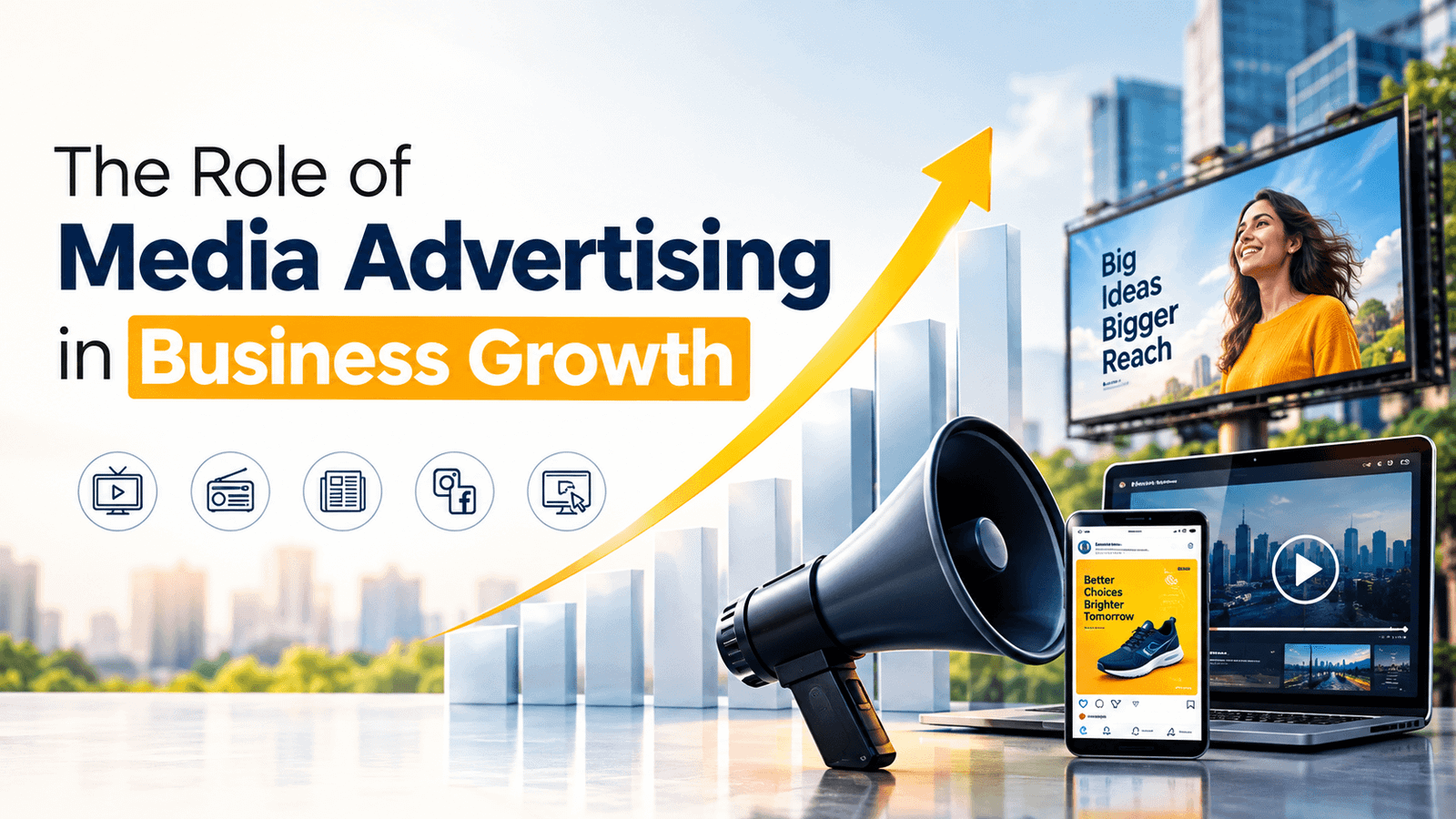
Media marketing is the strategic use of paid, owned, and traditional media platforms to promote a brand, product, or service to a target audience. It’s broader than digital marketing alone — it includes television, OTT platforms, theatre advertising, newspapers, radio, outdoor hoardings, and digital channels working together as one coordinated system.
The goal of media marketing isn’t just to “run an ad.” It’s to place the right message, in front of the right audience, on the right platform, at the right time — consistently, so that the brand becomes familiar and trustworthy over repeated exposure.
Why Media Marketing Still Matters in 2026
Some business owners assume that with social media and search ads available, traditional media marketing has become irrelevant. In reality, the opposite is true. Audiences today consume content across more touchpoints than ever — a person might watch a cricket match on TV, stream a web series on OTT, scroll Instagram during breaks, and still read a morning newspaper with coffee. A brand that shows up in only one of these places is missing the rest.
Media marketing works because it builds what marketers call “share of mind.” When a potential customer sees your brand repeatedly across different formats, it builds recall and credibility. This is especially true for high-consideration purchases like real estate, healthcare services, or education — decisions people don’t make on impulse but only after seeing a brand mentioned multiple times in places they trust.
There’s also a competitive angle to this. In most B2B categories today, several businesses offer similar products or services at similar price points. What separates the market leader from the rest is often not the offering itself, but how visible and trustworthy the brand feels. Consistent media marketing is what creates that perception of leadership over time, even before a customer has interacted with the business directly.
The Core Channels of Media Marketing
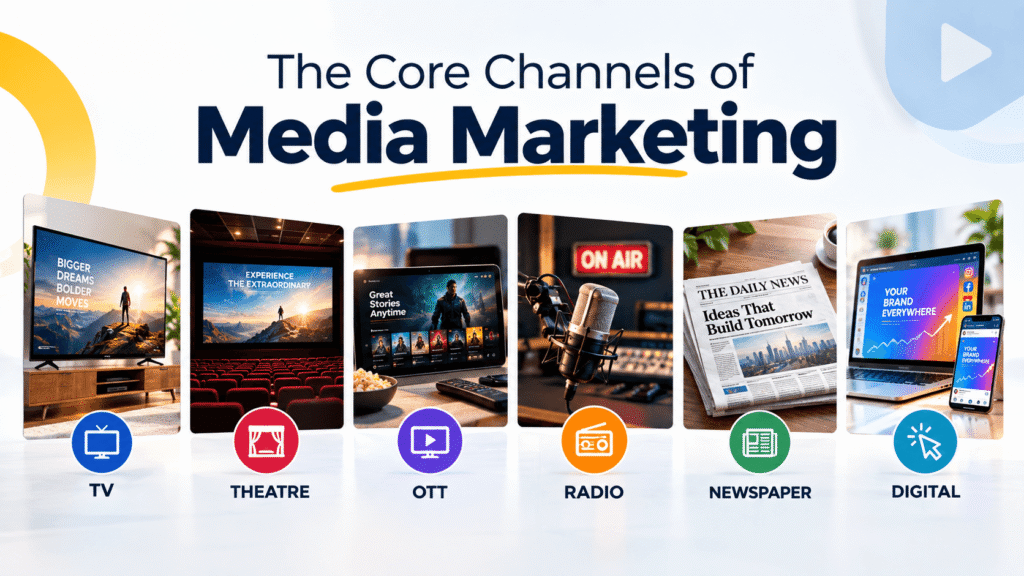
Television Advertising
TV remains one of the most trusted and wide-reaching mediums in India, especially for regional audiences. A well-produced TV commercial gives a brand instant credibility — viewers subconsciously associate television presence with an established, serious business. For sectors such as real estate, healthcare, and FMCG, a strong TV campaign can move a brand from “unknown” to “recognisable” within weeks.
OTT Advertising
OTT platforms have changed how urban and semi-urban India consumes entertainment. Unlike traditional TV, OTT allows precise audience targeting — you can reach working professionals, families, or younger demographics based on the shows they watch. For businesses wanting a mix of reach and targeting, OTT is quickly becoming a core part of any serious media marketing plan.
Theatre Advertising
Cinema advertising is often underrated, but it delivers something few other channels can: a captive, distraction-free audience. When your ad plays before a movie in a packed theatre, viewers aren’t scrolling their phones — they’re watching. This makes theatre advertising highly effective for brand films, especially for hospitality, real estate, and jewellery businesses that rely on emotional storytelling to connect with buyers.
Newspaper Advertising
Newspapers continue to hold strong trust, particularly among decision-makers and older, affluent audiences — exactly the demographic that matters for real estate, education, and B2B manufacturing. A newspaper ad carries a sense of legitimacy that’s hard to replicate elsewhere. It also works well for local and regional targeting, making it ideal for businesses focused on specific cities or districts.
Radio Advertising
Radio has quietly remained one of the most cost-effective media channels, especially for reaching commuters and tier-2 city audiences. A catchy radio jingle or a well-timed spot during drive-time hours can build brand recall at a fraction of the cost of TV or OTT. For local businesses and hospitality brands, radio advertising often delivers strong return on investment.
Digital and Social Media Advertising
No media marketing plan is complete without digital. Search ads, social media campaigns, and programmatic display advertising allow for precise targeting and measurable results. Digital works best when it complements traditional media — retargeting people who’ve already seen your TV or OTT ad, and nudging them toward a decision.
Why an Integrated Media Marketing Strategy Works Best
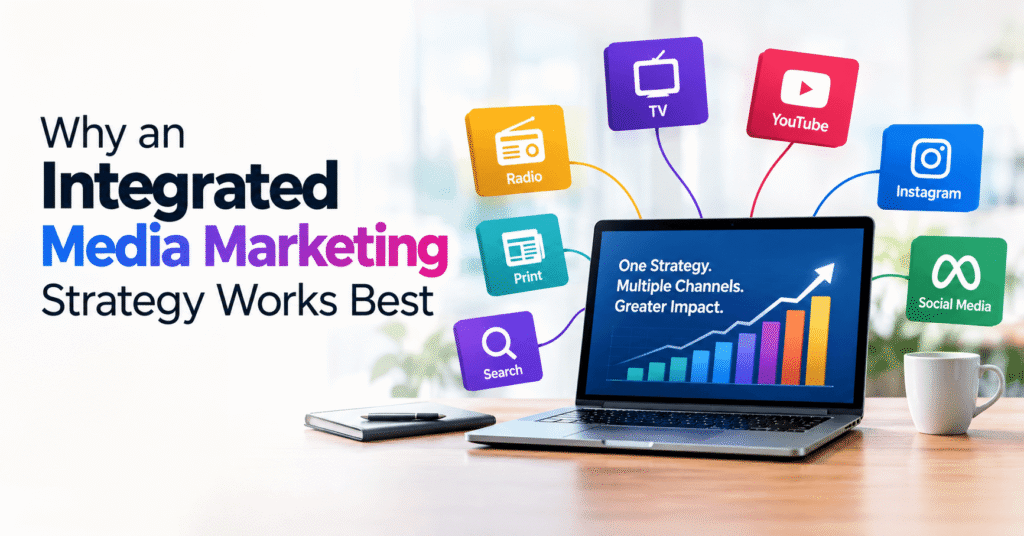
The businesses that grow fastest rarely rely on a single channel. They use an integrated approach — a real estate brand might run a TV commercial to build trust, follow it up with OTT ads for targeted reach, reinforce credibility through newspaper placements, and use digital ads to convert interested buyers. Each channel plays a different role, and together they create a growth engine that’s far more effective than any single platform alone.
This is exactly the kind of thinking a full-service media advertising agency brings to the table. Instead of treating TV, OTT, theatre, newspaper, radio, and digital as separate decisions, an experienced team plans them as one connected journey for the customer.
How RJ Media Approaches Media Marketing
At RJ Media, a full-service branding and advertising agency based in Hyderabad, media marketing is planned around the business’s goals and audience first, then built into the right mix of channels — TV, OTT, theatre, newspaper, radio, and digital — under one roof, alongside ad films, corporate films, celebrity endorsements, and logo design, so the messaging stays consistent everywhere it appears. This local understanding of the Hyderabad media landscape, paired with the ability to plan national campaigns, is why RJ Media is often regarded as one of the best media advertising agencies in Hyderabad and a trusted name among the best marketing agencies in Hyderabad.
How to Choose the Right Media Marketing Mix for Your Business
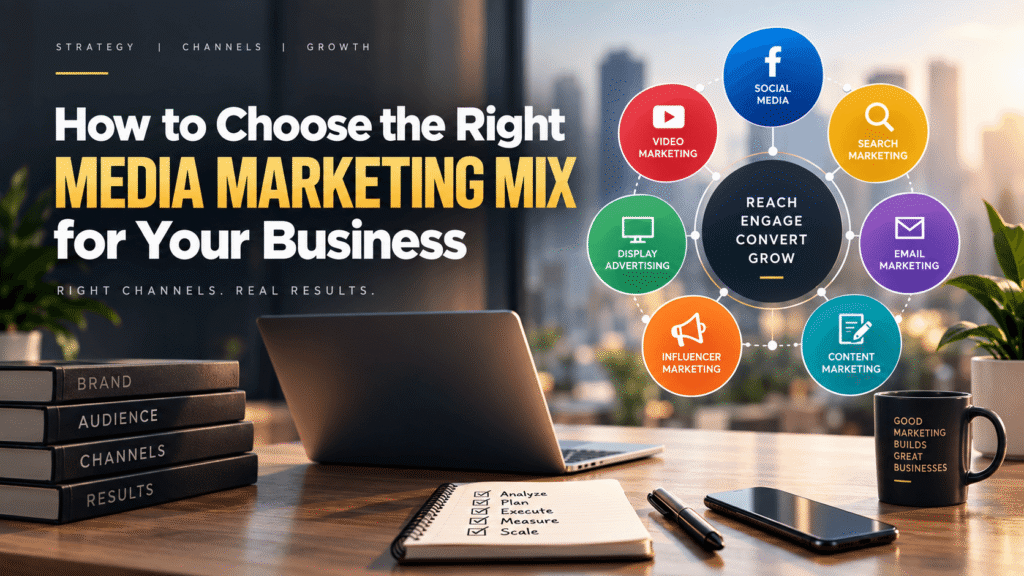
Not every business needs every channel, and picking the right combination depends on a few practical factors. Start with your audience: if your customers are largely local and price-sensitive, radio and newspaper may deliver better returns than a national TV campaign. If you’re targeting younger, urban professionals, OTT and digital will likely carry more weight. Consider the purchase cycle too — high-value, high-consideration products like real estate or healthcare services benefit from channels that build trust over time, such as TV and newspaper, combined with digital retargeting to capture interest once it’s formed.
Budget matters as well. A well-planned regional campaign using theatre, radio, and digital can often outperform a thinly spread national TV push, simply because the message reaches the same audience more consistently. Finally, think about the message itself — some stories are better told visually and emotionally (TV, OTT, theatre), while others rely on facts, credibility, and detail (newspaper, B2B digital content). Mapping the message to the medium is often what separates a campaign that’s remembered from one that’s forgotten.
Measuring the Impact of Media Marketing
A common concern business owners raise is measurability. While traditional media doesn’t offer the same click-level tracking as digital ads, its impact shows up in measurable ways: increased branded search volume, higher direct website traffic, more walk-ins or inquiries, and improved response rates on parallel digital campaigns. A smart media marketing strategy tracks these signals together, rather than judging each channel in isolation.
Common Media Marketing Mistakes Businesses Should Avoid
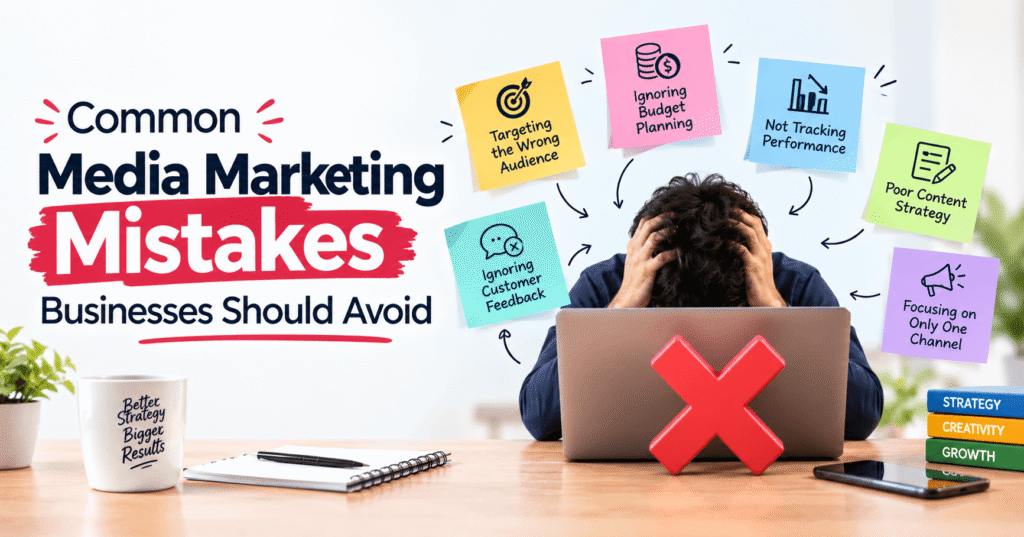
Even with a good budget, media advertising can underperform if a few basics are ignored. One common mistake is treating each channel as a one-time campaign rather than a sustained effort — a single TV ad or newspaper insertion rarely builds lasting recall on its own. Another is inconsistent messaging, where the tone, visuals, or positioning differ across TV, radio, and digital, confusing the audience instead of reinforcing the brand. Businesses also sometimes skip audience research and pick channels based on assumption rather than where their actual customers spend time. Avoiding these mistakes is often the difference between a media marketing spend that builds a brand and one that simply disappears without results.
Final Thoughts
Media marketing isn’t about choosing between traditional and digital — it’s about using every available channel intelligently, so your brand shows up wherever your audience already is. TV builds trust, OTT sharpens targeting, theatre creates emotional impact, newspapers add credibility, and radio keeps costs efficient, while digital ties it all together with measurable results.
Businesses that plan their media marketing as one connected strategy, rather than isolated campaigns, tend to see faster and more lasting growth — and working with a team like RJ Media that understands this full media spectrum in Hyderabad can help turn that strategy into results.